
For anyone interested in solving the scavenger hunt, this article contains spoilers (and probably no clear image)! Instead, head to the dedicated page here. The CAMPers arrive to see the next clue of the day already out. It’s not in an envelope this time, but scrawled across the blackboard instead. Instantly, the CAMPers begin working, discussing with each other the answers to the previous days’ clues and how to fill the eleven blanks. As the time draws nearer and nearer to the start of math class, the clue is finally cracked— the numbers translate into the letters d-o-d-e-c-a-h-e-d-r-o-n using the red and black encyclopedias.


The CAMPers race out to the dilapidated dodecahedron to find another encrypted message. They attempt to solve it too, but they run out of time. Makayla and Ada promise that there will be time to work at the end of math class, or worse case at lunch.


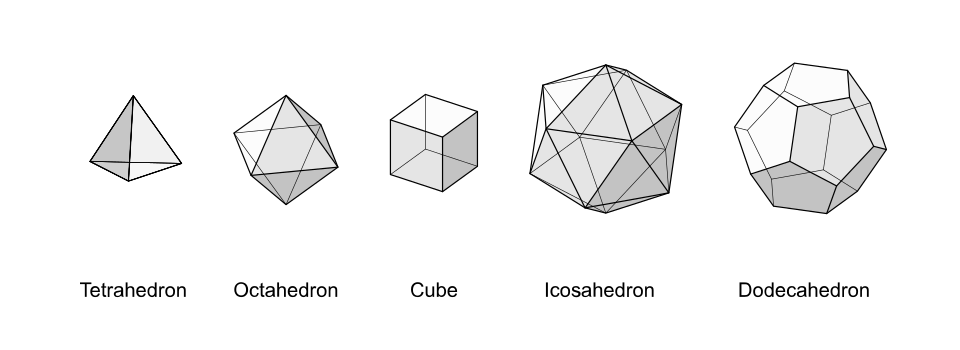
For anyone not versed in the names of polyhedrons, or one who hasn’t fully explored Bard campus, the shape “dodecahedron” might not mean much. A dodecahedron is actually one of the five platonic solids (named after Plato in his Timaeus) along with the tetrahedron, cube, octahedron, and icosahedron. These are all regular polyhedra, meaning each of their sides is a regular polygon — a flat shape with all sides and angles equal, like a square or equilateral triangle — and each vertex has the same amount of faces. There can only ever be five platonic polyhedrons because every vertex has to add up to less than 360 degrees. If you want to learn more, this website does a pretty good job!
The math classes begin by listing observations about the multiplication table they created yesterday. The CAMPers reiterate the fact that each “good” moduli —which are numbers relatively prime to 26, meaning they share no common factors besides 1— appears once in each column and row, rather like a Sudoku. Then they receive each others’ encrypted messages, and decrypt them using the multiplicative inverses listed in the table. CAMPers enjoy working with and double checking each other, especially as some of the multiplication ends up with big numbers.


Learning the Affine cipher is next. It consists of a layered encryption, of a multiplication then additive shift. To decrypt, they use more addition and multiplication to find the inverse function. For example, one of the Affine ciphers has a multiplication of 3 followed by a shift of 4, which can be written in y=mx+b style as y=3(x)+4 where “y” is the ciphertext and “x” is the cleartext. To decrypt, they use modular arithmetic style algebra to add and multiply to isolate x. In the end, they end up with the equation y=9x+16, which decrypts any ciphertext encoded with y=3x+4.


With Fidan in computer science, Tangent reviews everything they’ve learned from yesterday and throughout the week. Then the CAMPers begin with their final assignment— coding a Caesar cipher. They first attempt a +13 shift cipher, which is one of the easiest as they can shift it either way. Fingers hit keys as the room bursts into life, the CAMPers quickly using their programming-pairs to collaborate and create a program. Fidan watches, wandering between them and offering tips when requested. The programs are built before the period ends, so they are assigned to create a program that will do any number shift. The CAMPers continue to work on their task up until the class ends.


In art, Cotangent also begins on their final project. This time, it’s a culmination using at least two of the ciphers they’ve learned throughout the week to write an encrypted sentence in a drawing that represents their time here at CAMP. After planning out their message on a separate piece of paper, the CAMPers get to work on their panoramic art pieces. By the end of the class, they’re all satisfied and happy with the day’s work.


At lunch, the usual groups form as the CAMPers spend their last day with their friends. During this time, they also solve the riddle from this morning, which tells them “Congrats! Collect your prize at open house.”


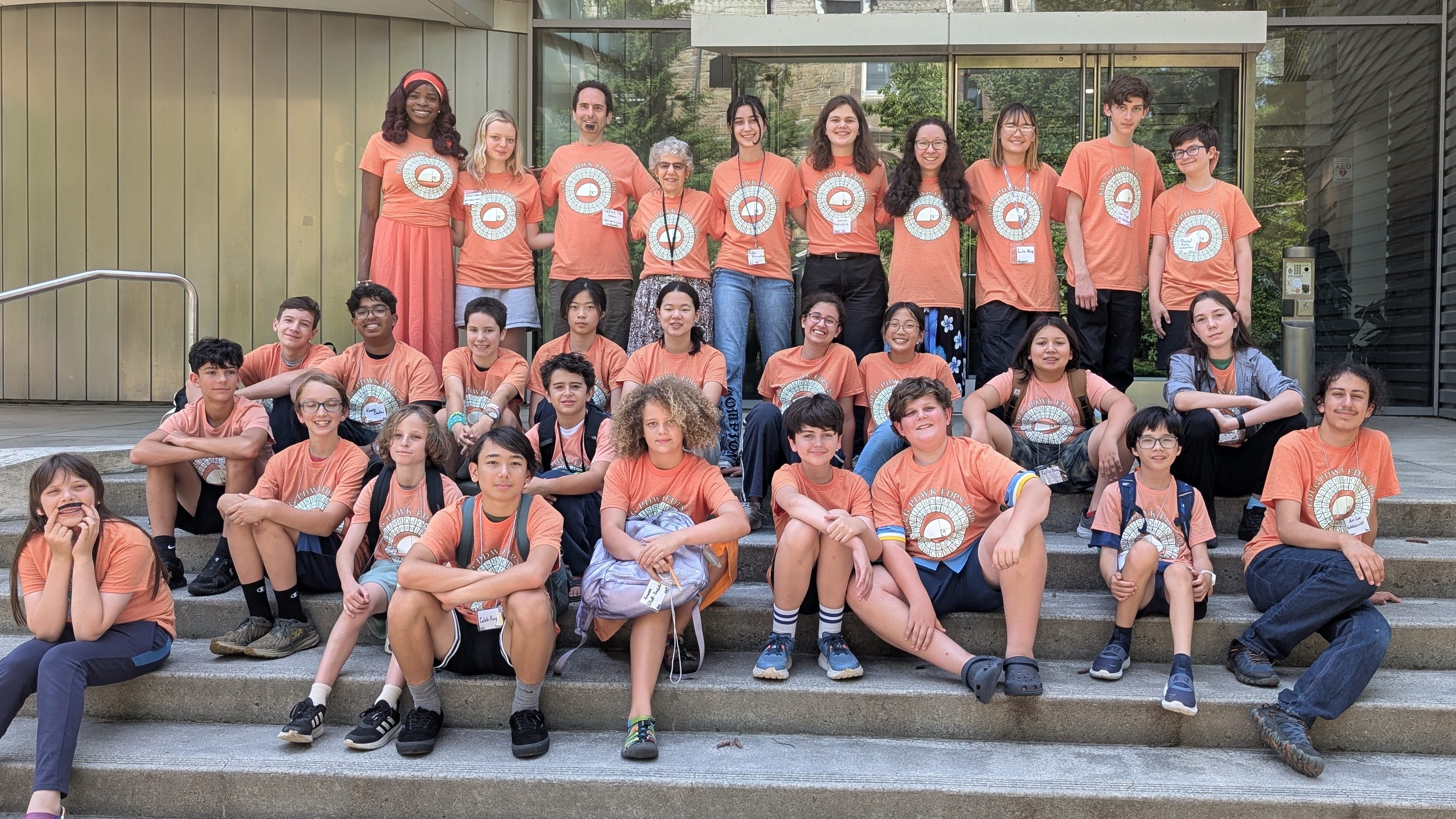
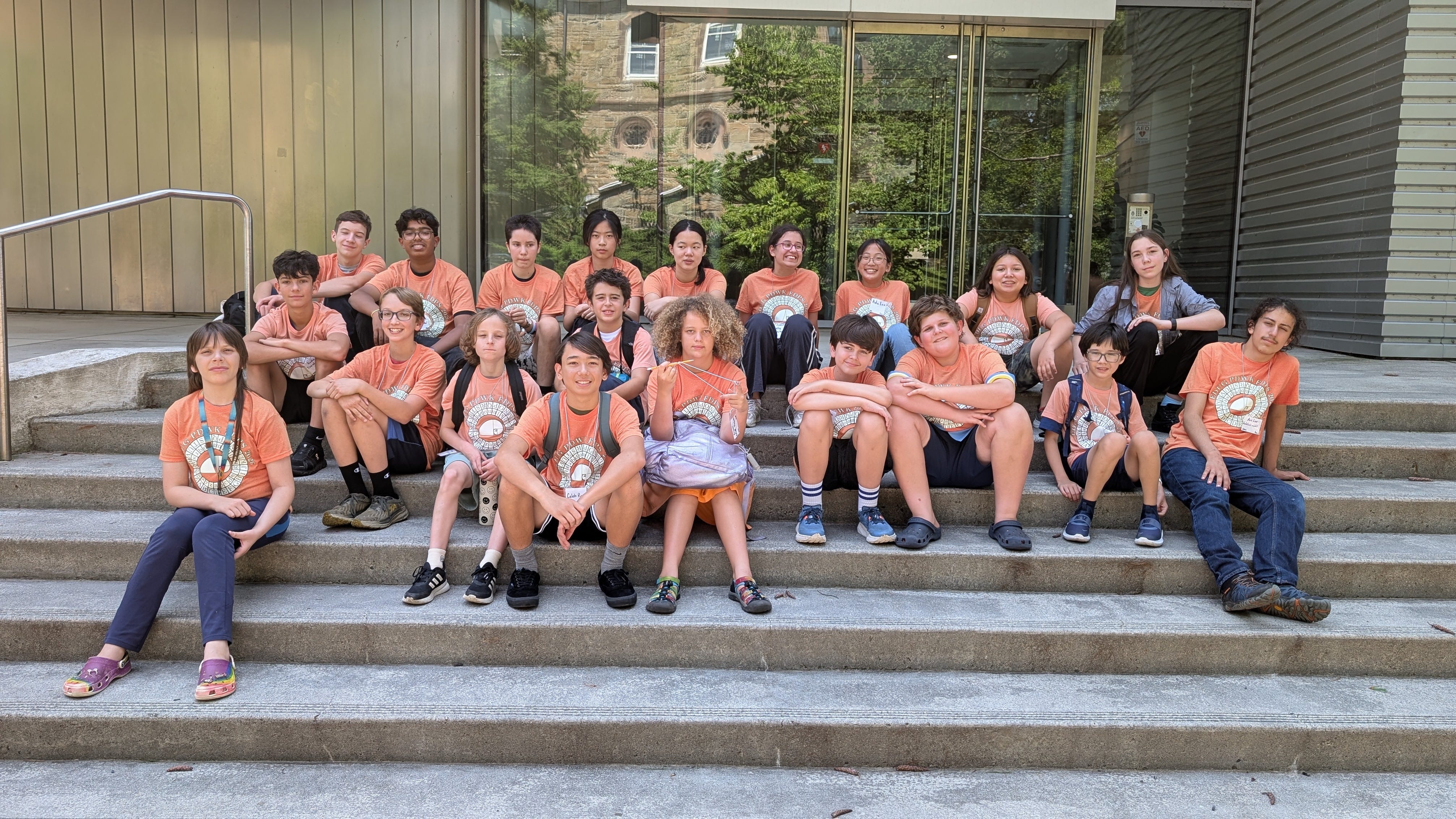
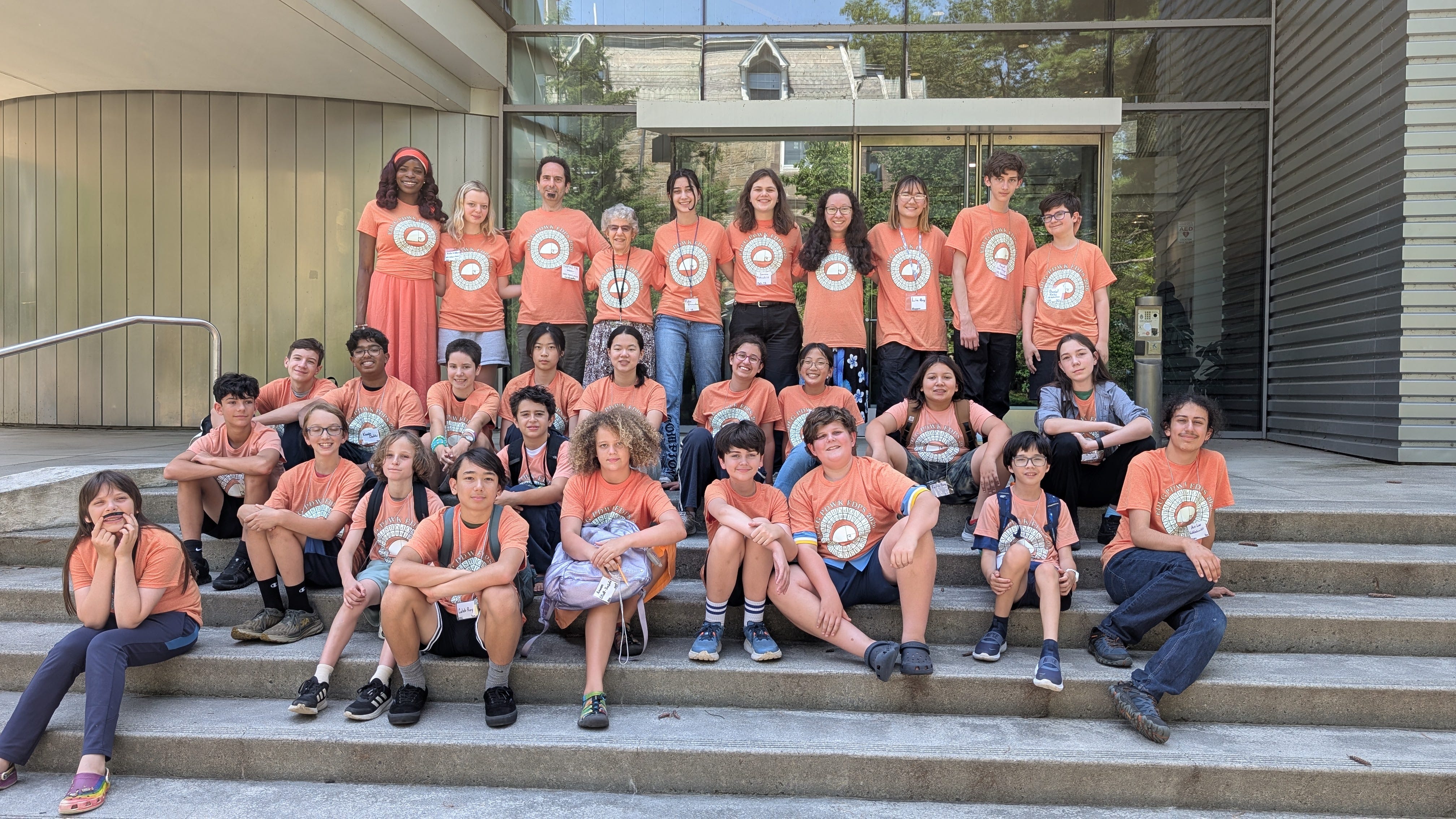
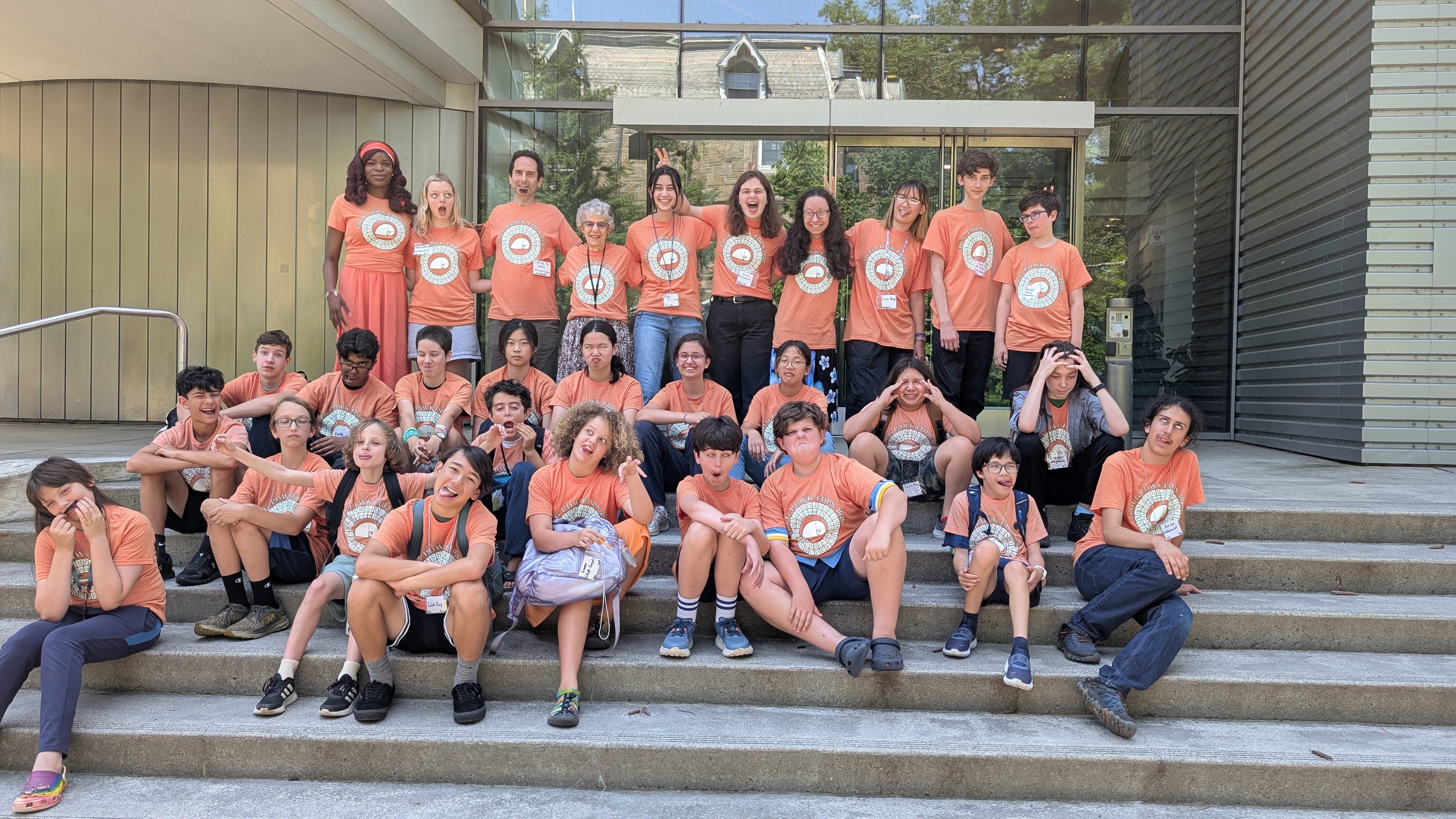
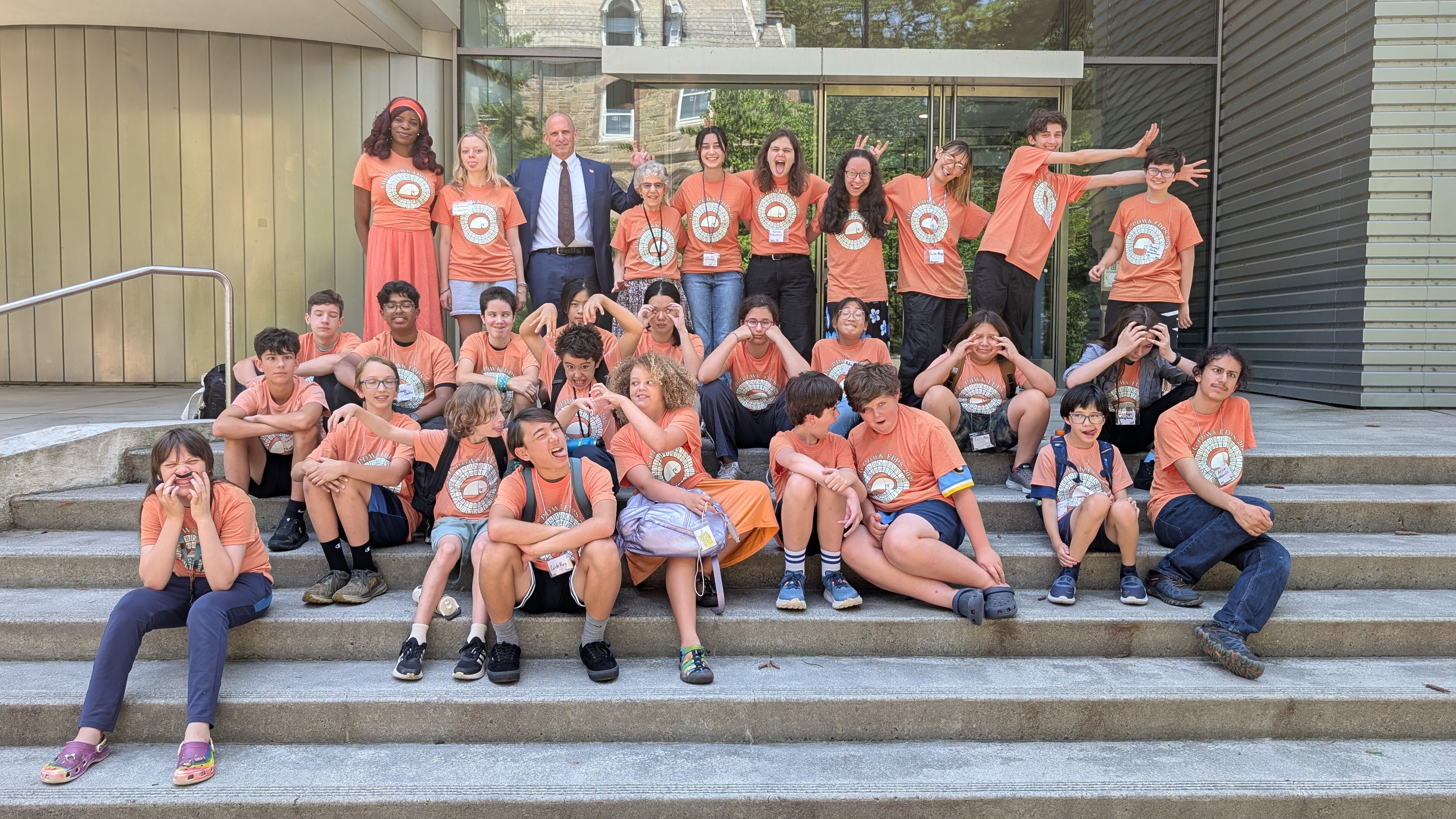
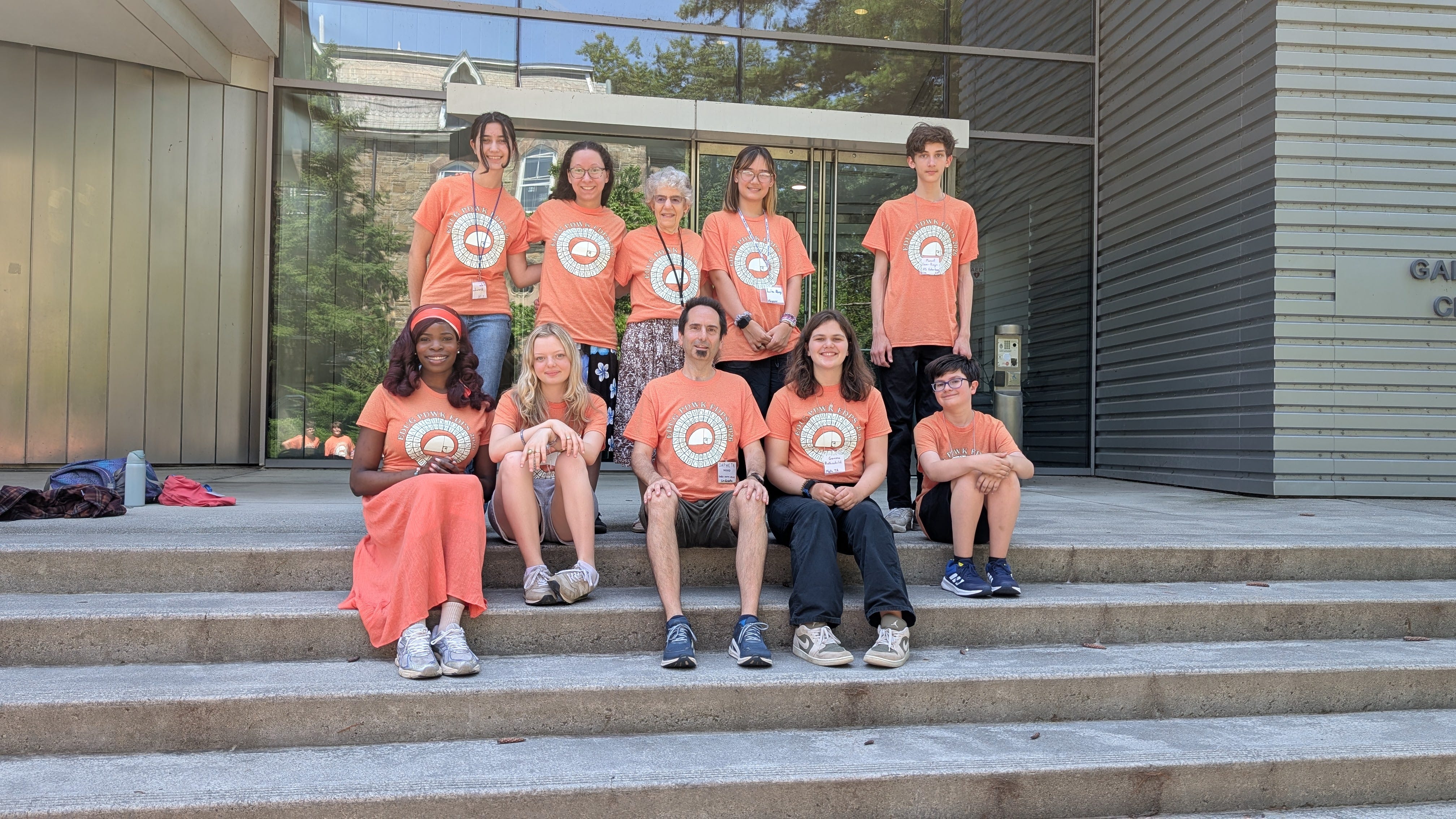
Instead of having electives today, we use this time to get in our last preparations. This includes every student taking their survey, before trading it in for their requested t-shirt. Once that process has been completed, Japheth leads the way out to the steps of the other physics building to take the annual group picture. A picture of just the CAMPers commences, followed by one with all of the staff added on, and finally one of only staff. The CAMPers head back, helping put up the artworks and math papers until it’s time for their next class. Thank you, CAMPers, for all of your help!


In computer science, Cotangent reviews everything from yesterday. Then they work as a class to simplify the function they all programmed yesterday. Fidan leads them, letting the CAMPers collaborate with each other and bounce ideas back and forth to code it in only one if-statement! Although they may not have thought up the optimized version themselves, they all understand and contribute to the creation. The next thing for the CAMPers to learn is string slicing, which takes a select portion from a string. It takes in three values inside of square brackets [ ] at the end of a string— the start index, the end index, and the step or interval between each index. The CAMPers teach themselves what these three inputs do, then share as a class to get their collective definitions.


Now it’s Tangent’s turn to work on their culminating project! After discussing the meanings to any artworks unable to be discussed earlier in the week, the CAMPers get right to work. Layo walks around, investigating the different ciphers and art styles used. Over the course of the period, ciphertext and color begin to form an image across the papers. The CAMPers leave the class happy with the results!


Then it is open house time! A slideshow cycling through all of the pictures of the week is set up as Frances and Japheth lead an introduction of all the staff members. Then the parents and CAMPers are free to wander around and investigate the contents of this week’s CAMP. Maxwell and Daniel help with the merchandise table as the other staff members mingle with the families.


Overall, it is a great conclusion to a great week! We hope all of the CAMPers learned something that continues to foster their interest in mathematics, computer science, and art. It was so amazing seeing all of the CAMPers genuinely interested in doing more than required, especially with the take-home problems in the scavenger hunt. Thank you, everyone, for making this week such a fantastic experience.