

Welcome to CAMP Day 3! CAMPers had worked their way through the week with hard work and creativity. Today’s work focus on the application of tessellations. Each class explores topics on tessellations with CAMPers experimenting with each subject with their hands.
In Shuang‘s Art Class, CAMPers begins with exploring different real-life tessellations. For instance, bee comb, turtle’s shell, pineapple, and tiles.
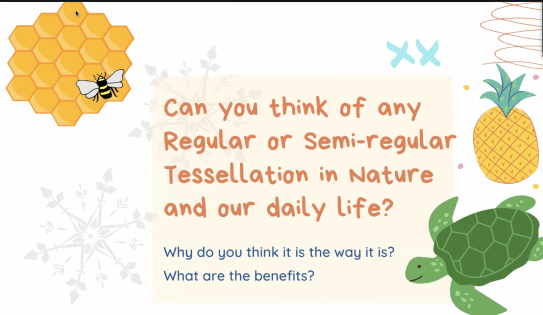
CAMPers later have a conversation on “Why does tessellation exists?” They give out several reasons: natural efficiency, saving space, and having an arch-like shape like a turtle shell to provide protection.
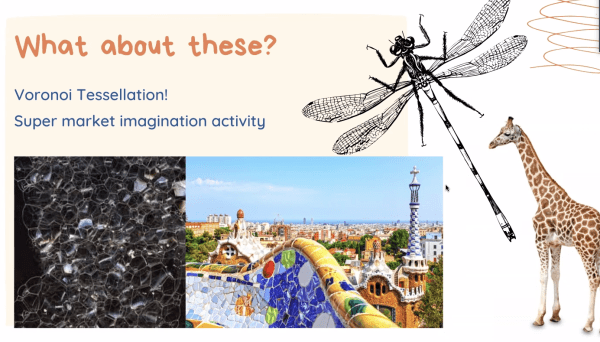
CAMPers are also introduced to Voronoi Tessellation. Unlike the tessellations CAMPers encountered before, Voronoi Tessellation spreads out in a less equal pattern yet still having connections on a plane. For instance, a giraffe’s skin will be a Voronoi Tessellation.
To make the objective clear, CAMPers play a supermarket imagination activity that Shuang designed. This activity involves CAMPers imagining themselves in a supermarket and making various points outward.
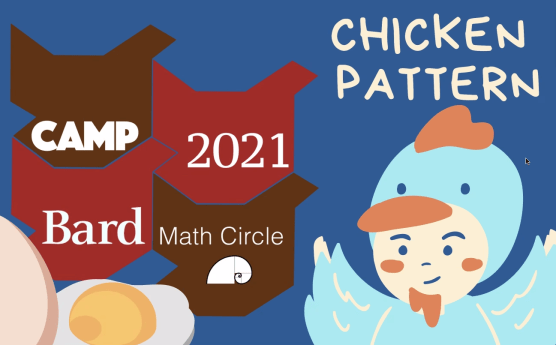
CAMPers later designed their own chicken pattern through origami papers. Chicken patterns design is also used in this year’s CAMP T-shirt (by Shuang!).
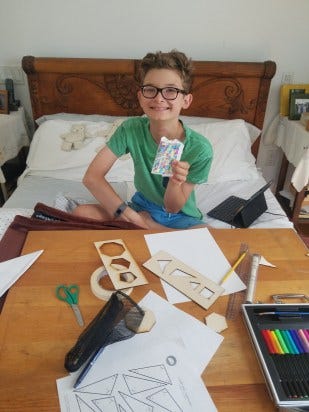
In Grace‘s Art Class, CAMPers also work on chicken patterns making. CAMPers also learn how to fold chicken pattern from scratch and to construct several chicken patterns together to form a tessellation.
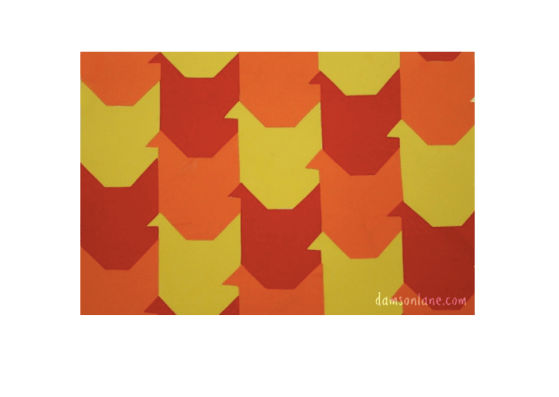
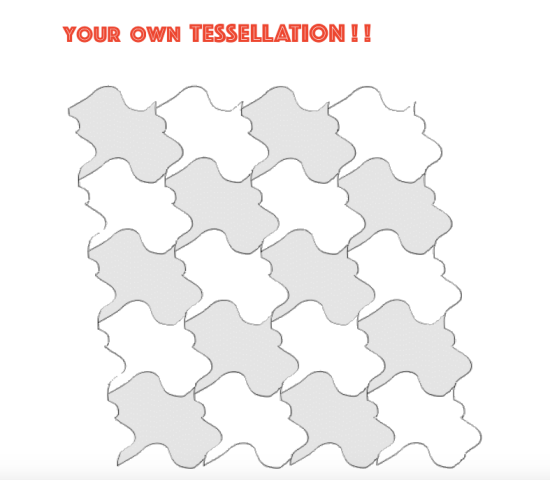
CAMPers also learn how to make their own tessellations through reconstructing and connecting each pieces together.
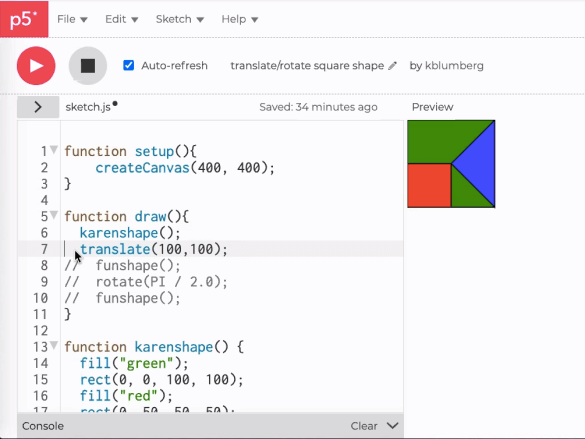
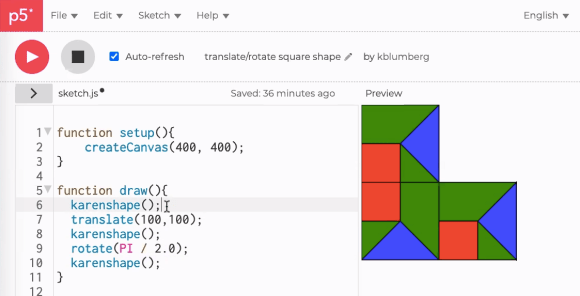
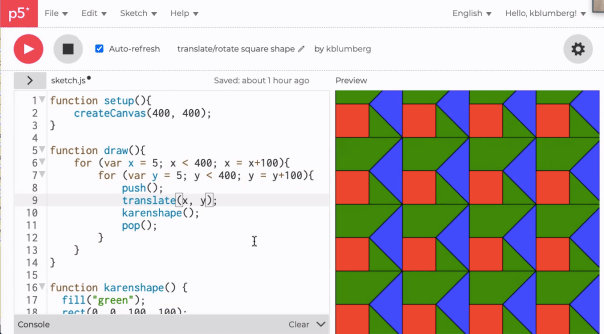
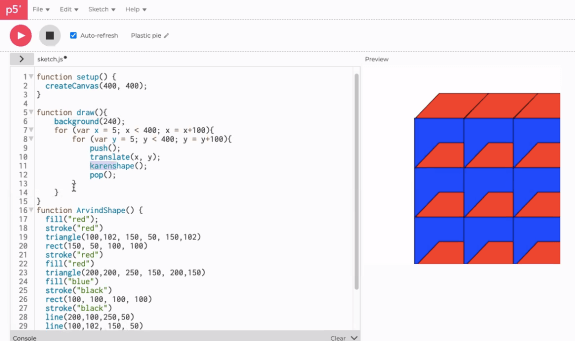
In Karen‘s Computer Science Class, CAMPers write codes to form images. They then translate the images they create and create the shape over and over again. Eventually, they make multiple shapes that form tessellations.
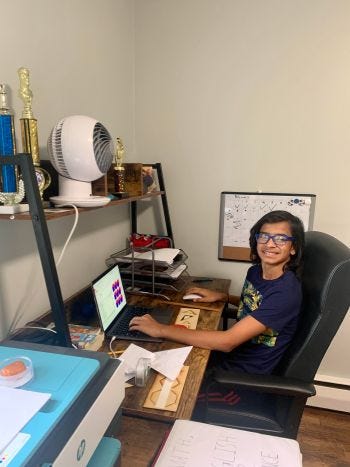
In Frances‘s Math Class, CAMPers in SINE and COSINE are figuring out how to find the sum of the angles of a polygon using the fact that each triangle’s angles sum to 180 degrees.
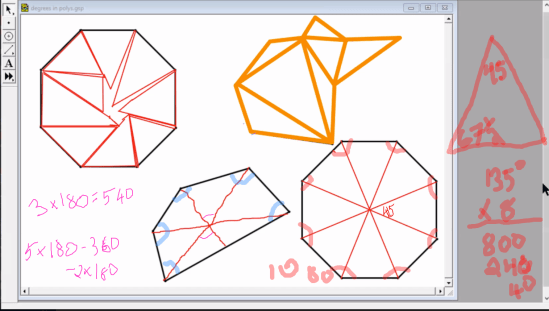
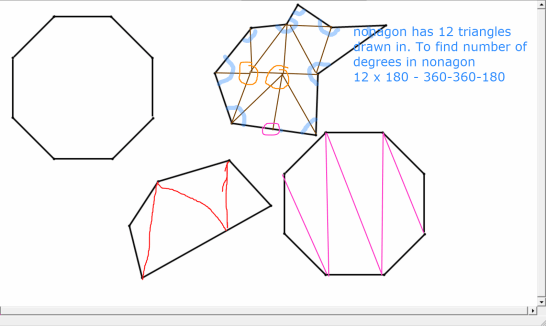
Unlike going straight to definition, CAMPers have their hands on experience on testing out different angles to see how different polygons work. After these observations, CAMPers calculate what each angles are and label out each angles of the polygons.
In addition, CAMPers in secant and cosecant have figured out
1) The number of degrees in each angle of a regular polygon
2) That each vertex of a tessellation must be surrounded by polygons whose angles add to 360 degrees
Next they began to make use of the rules to create tessellations with more than one shape of polygon.
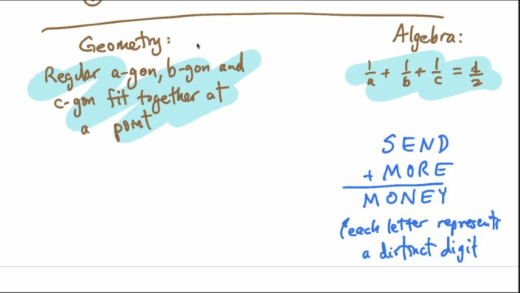
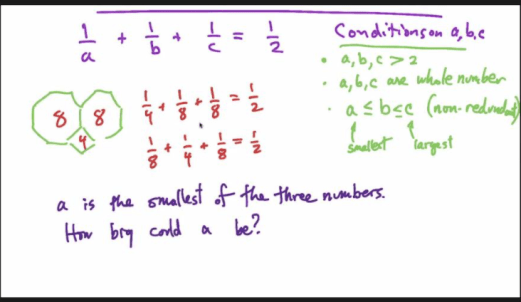
In Japheth‘s Math Class, CAMPers work on solving polygon tessellation around a point problem. CAMPers are introduce to both geometry and algebraic ways to understand tessellations.
As we get to the middle of CAMP, CAMPers continue to show effort and passion in the topic being introduced. Through activities and experiment, math becomes a fun activity and knowledge for all!
For more updates, follow us on:
Blog: https://bardmathcircle.org/camp/camp-more-information/
Facebook: @BardMathCircle
Instagram: @bardmathcircle
Twitter: @BardMathCircle